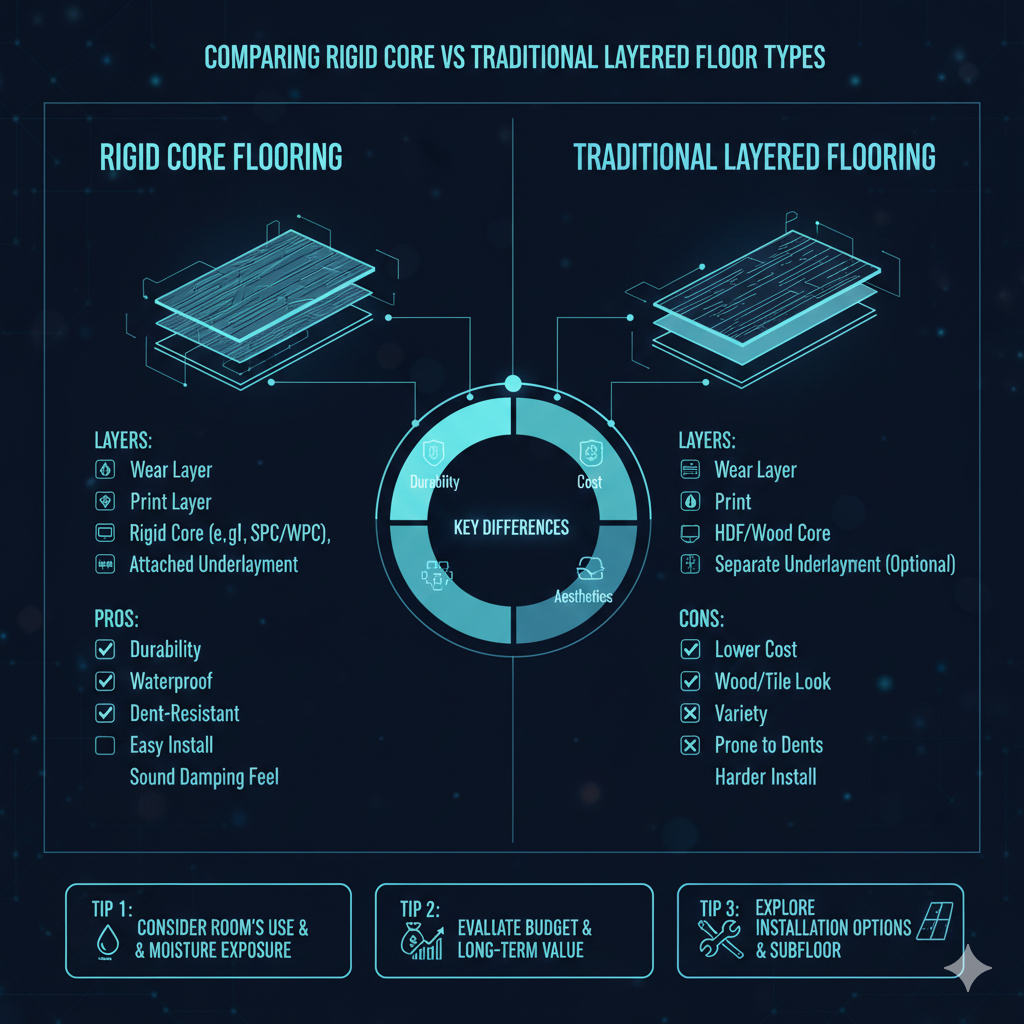

Choosing the right flooring can be confusing sometimes. Many people wonder which type works best at home. Rigid core vs traditional layered floor types have different strengths.
Each floor type performs differently under daily use. Cost, durability, and maintenance vary between these options. Learning their differences helps make the right choice.
Keep reading to compare rigid core vs traditional layered floor types.
Durability Differences Between Rigid Core and Layered Floors
Rigid core floors offer high resistance to dents and scratches. Traditional layered floors are more prone to surface damage over time. Heavy foot traffic can affect layered floor longevity faster.
Rigid core materials maintain their structure under weight pressure. Layered floors may swell or warp if exposed to moisture. Homeowners need to consider usage patterns before choosing floors.
Rigid cores perform better in busy households or offices. Traditional layered floors require careful maintenance to extend their life. Knowing this helps prevent early flooring replacements.
Water Resistance and Moisture Tolerance
Rigid core flooring is highly resistant to water damage. Traditional layered floors absorb moisture and may swell or warp. Moisture issues can lead to mold growth in layered floors. Rigid core installation works well in kitchens and bathrooms.
Layered floors need proper sealing to withstand spills effectively. Rigid core materials often handle humidity better without problems. Layered floors may require special underlayment to prevent issues.
Choosing the right flooring helps avoid costly repairs later. Understanding moisture tolerance protects your investment and floor integrity.
Comfort and Underfoot Feel
Layered floors often feel warmer and softer underfoot. Rigid core floors can feel firmer and cooler in homes. Sound absorption differs between these floor types significantly.
Layered floors provide a cushioned walking experience naturally. Rigid core may need underlayment for added comfort. Comfort often depends on material thickness and installation method.
Layered floors are easier on joints for long walking periods. Rigid core offers a stable surface for heavy furniture. Consider personal comfort needs when selecting flooring options carefully.
Installation Simplicity and Time
Rigid core floors usually install faster than layered floors. Traditional layered floors require more precise subfloor preparation steps. Click-lock systems simplify rigid core installation for beginners.
Layered floors often require glue or nails for stability. Rigid core can be installed over existing hard surfaces. Layered floors may demand professional help for proper installation.
Time saved on installation reduces overall project disruption effectively. Rigid core floors suit DIY projects better than layered types. Proper installation ensures long-lasting performance regardless of choice.
Aesthetic Options and Style Flexibility
Layered floors offer natural wood looks and texture variety. Rigid core floors can mimic wood or stone finishes effectively. Patterns and designs are often more consistent in rigid core.
Layered floors show natural grain and subtle imperfections attractively. Rigid core provides uniform color across entire installation easily. Layered floors allow sanding and refinishing to refresh appearance.
Texture choice impacts the feel and look of spaces. Rigid core offers high-quality visual appeal with low maintenance. Selecting style depends on design preference and room purpose.
Longevity and Lifespan Differences
Rigid core floors often last longer under heavy use conditions. Layered floors can wear faster in high traffic areas. Water exposure shortens layered floor lifespan considerably if unprotected.
Rigid core maintains appearance longer without refinishing requirements. Layered floors may require occasional resurfacing to stay presentable. Long-term durability influences flooring replacement timing and costs.
Rigid core materials resist fading and surface scratches effectively. Layered floors depend on quality and maintenance for longevity. Lifespan expectations help guide smart flooring investments wisely.
Sound and Noise Reduction Properties
Layered floors absorb impact noise naturally due to softer layers. Rigid core floors can transmit sound more easily through structure. Underlayment improves rigid core noise reduction substantially. Layered floors are quieter for:
- walking
- running
- furniture movement
Rigid core may need additional pads or mats for silence. Noise control matters in:
- apartments
- offices
- multi-story homes
Layered floors can enhance overall acoustic comfort indoors. Rigid core provides solid surfaces for activities without squeaks. Proper installation impacts noise performance significantly for each type.
Scratch and Stain Resistance
Rigid core floors resist scratches better than traditional layered floors. Layered floors require more care to prevent surface damage.
Everyday wear and tear affect layered floors faster than rigid core. Rigid core tolerates:
- pets
- furniture
- heavy foot traffic
Layered surfaces may show marks and stains easily over time. Protective coatings can improve scratch resistance on layered floors. Rigid core maintains visual appeal longer under harsh conditions.
Layered floors need occasional refinishing to restore smooth surfaces. Choosing scratch-resistant flooring reduces long-term maintenance efforts noticeably.
Heat and Sunlight Tolerance
Rigid core floors resist fading from sunlight exposure effectively. Layered floors may discolor or warp under direct sunlight. UV protection enhances durability for layered materials significantly.
Rigid core tolerates temperature fluctuations better than traditional layered types. Layered floors require careful positioning away from windows to prevent damage. Heat exposure can impact layered floor adhesives and finishes.
Rigid core materials remain stable in hot or cold conditions. Layered floors may need window treatments for long-term preservation. Assessing sun and heat impact ensures flooring longevity successfully.
Repair and Replacement Simplicity
Rigid core floors allow quick replacement of damaged planks individually. Layered floors may require larger sections replaced for consistency. DIY repairs are easier for rigid core than layered materials.
Layered floors need professional intervention for proper refinishing or repair. Rigid core maintains appearance during partial replacements without noticeable difference. Layered floors can require sanding to blend patches effectively.
Repair costs are generally lower for rigid core types. Layered floors demand careful attention to matching colors precisely.
Comparison of Texture and Finish Options
Rigid core floors come in various embossed textures for realism. Layered floors offer natural wood feel underfoot authentically. Finish options affect appearance, maintenance, and durability significantly.
Rigid core textures mimic stone, wood, or tile patterns successfully. Layered finishes enhance aesthetic appeal with natural grain and shine. Scratch-resistant coatings improve layered surface longevity substantially.
Rigid core finishes often require less ongoing care than layered types. Layered floors allow refinishing to restore texture and luster. Matching texture to style preference ensures functional and visual satisfaction.
Resistance to Heavy Furniture and Equipment
Rigid core flooring withstands heavy furniture without denting issues. Layered floors are more vulnerable to indentation under weight. Protective pads can help layered floors resist localized damage.
Rigid core maintains flat surfaces even with constant load. Layered floors require careful positioning of furniture to prevent marks. Office or home gyms benefit from rigid core durability effectively.
Layered floors may deform if furniture is moved frequently. Weight resistance matters in high-traffic or multipurpose spaces significantly. Choosing proper flooring avoids costly damage and replacements over time.
Cleaning Convenience and Stain Management
Rigid core floors allow quick removal of common household stains. Layered floors may need specialized cleaning solutions for tough marks. Spills on layered floors require immediate attention to avoid absorption.
Rigid core resists water and food penetration efficiently. Layered floors can discolor if liquids remain too long. Routine sweeping and mopping maintain both floor types effectively.
Rigid core flooring reduces time spent on daily maintenance. Layered floors demand careful cleaning to preserve surface quality. Cleaning convenience impacts long-term satisfaction with chosen flooring materials.
Temperature and Subfloor Compatibility
Rigid core floors tolerate uneven subfloors better than layered types. Layered floors require highly level surfaces for proper installation. Subfloor preparation affects long-term performance and floor stability.
Rigid core adjusts to minor irregularities without damage. Layered floors may show gaps or warping over time. Underlayment can improve both floor types’ comfort and stability.
Rigid core is suitable for radiant heating systems effectively. Layered floors need professional guidance for optimal temperature adaptation. Compatibility ensures safe installation and long-lasting performance consistently.
Comparing Popular Options
Many homeowners compare flooring using quality and cost factors. Lions SPC vs laminate, for example, may highlight rigid core and layered differences clearly. Both flooring types have strengths depending on household requirements.
Rigid core often wins in water resistance and durability tests. Laminate can offer appealing design at lower upfront costs. Installation, maintenance, and repair needs influence final decision significantly.
Evaluating each feature ensures informed, practical flooring choices. Personal preference and room conditions affect final selection overall. Researching comparisons like this helps make confident, lasting decisions.
Long-Term Investment and Value
Rigid core floors add value through durability and low maintenance. Layered floors may require updates to maintain appearance over years. Longevity, comfort, and style influence property resale appeal directly.
Rigid core minimizes future repair costs and replacement frequency.Layered floors can be refinished to refresh worn areas periodically. Flooring quality impacts home aesthetics, comfort, and marketability effectively.
Rigid core is often considered better long-term investment overall. Layered floors remain a viable option in specific scenarios.
Learn to Compare Rigid Core vs Traditional Layered Floor Types
Rigid core and layered floors both have clear advantages. Durability, water resistance, and comfort differ between each type. Rigid core works well in high-traffic or wet areas.
Layered floors offer warmth and natural style appeal. Maintenance and installation needs should guide your decision.
Cost and room conditions matter for long-term satisfaction. Understanding these factors ensures a flooring choice you can trust.
Should you wish to read more, you may visit our blog. We’ve got more topics!