The dominant narrative of the artificial intelligence revolution has been one of corporate supremacy. Companies such as OpenAI, Google, Microsoft, and Meta have been involved in a fierce competition to define the capabilities, ethical limits, and deployment strategies of Large Language Models (LLMs). However, as we navigate through early 2026, a significant new paradigm is emerging—the rise of Sovereign AI. Nations, recognizing the critical importance of AI as both an economic driver and a strategic asset, are no longer content relying solely on foreign-controlled technology. The race to build domestic, sovereign LLMs (large language models) has officially begun.
1. The Strategic Shift: Moving Beyond Big Tech Dependencies
Until recently, the strategy for most governments was adaptation: how to integrate existing American or Chinese AI tools into their economies and infrastructure. This approach, while initially efficient, presented profound long-term risks that are now driving the sovereign push.
The Risks of Digital Dependency:
- Security & Espionage: Relying on foreign LLMs, especially for sensitive governmental, defense, or infrastructure tasks, creates immense vulnerability. Data privacy is difficult to guarantee when the model’s compute and ownership reside across borders, as this can lead to unauthorized access to sensitive information and potential exploitation by foreign entities.
- Economic Leverage: When a nation’s economy completely relies on a foreign AI infrastructure, the entity in charge of that AI wields significant geopolitical and economic power.
The realization that AI is the modern equivalent of the electric grid or telecom network—a foundational utility—has made digital sovereignty a national priority.
2. The Cultural Gap: Why Western Models Fail Local Needs
Big Tech LLMs are incredibly powerful, but they are intrinsically biased by the data they were trained on—which is overwhelmingly English-centric and Western-reflective. This creates a cultural “mismatch” for much of the world.
The Importance of Localized Data:
- Nuance and Context: A sovereign AI trained on localized legal texts, historical data, local news, and literature understands a nation’s specific social norms, idioms, and context far better than a generalized global model.
- language Support: For nations with underrepresented languages, global LLMs often provide inferior service, leading to misinterpretations and a lack of cultural relevance in their responses. A domestic AI can prioritize perfect fluency and high performance in the native language, democratizing access to AI benefits.
Sovereign AI is as much about preserving cultural and linguistic identity in the digital age as it is about national security.
3. The Economic Catalyst: Building an AI Ecosystem
The standard model of AI adoption in 2026 is moving from “text-out” (chatbots) to Agentic Workflows (AI taking action). To implement this effectively across an entire economy, a reliable, localized, and affordable base layer is required.
Fostering Domestic Innovation:
- Standard Base Layer: A sovereign LLM provides a common “operating system” for domestic startups, academic institutions, and corporations. They can build localized “agentic” solutions on top of a model they trust, optimized for local regulations and markets, which can lead to increased competitiveness and innovation in various sectors such as healthcare, finance, and education.
- Talent Development: The process of building and maintaining a national AI fosters a high-skill talent pool, reducing the “brain drain” of top AI scientists and engineers to Silicon Valley or Beijing.

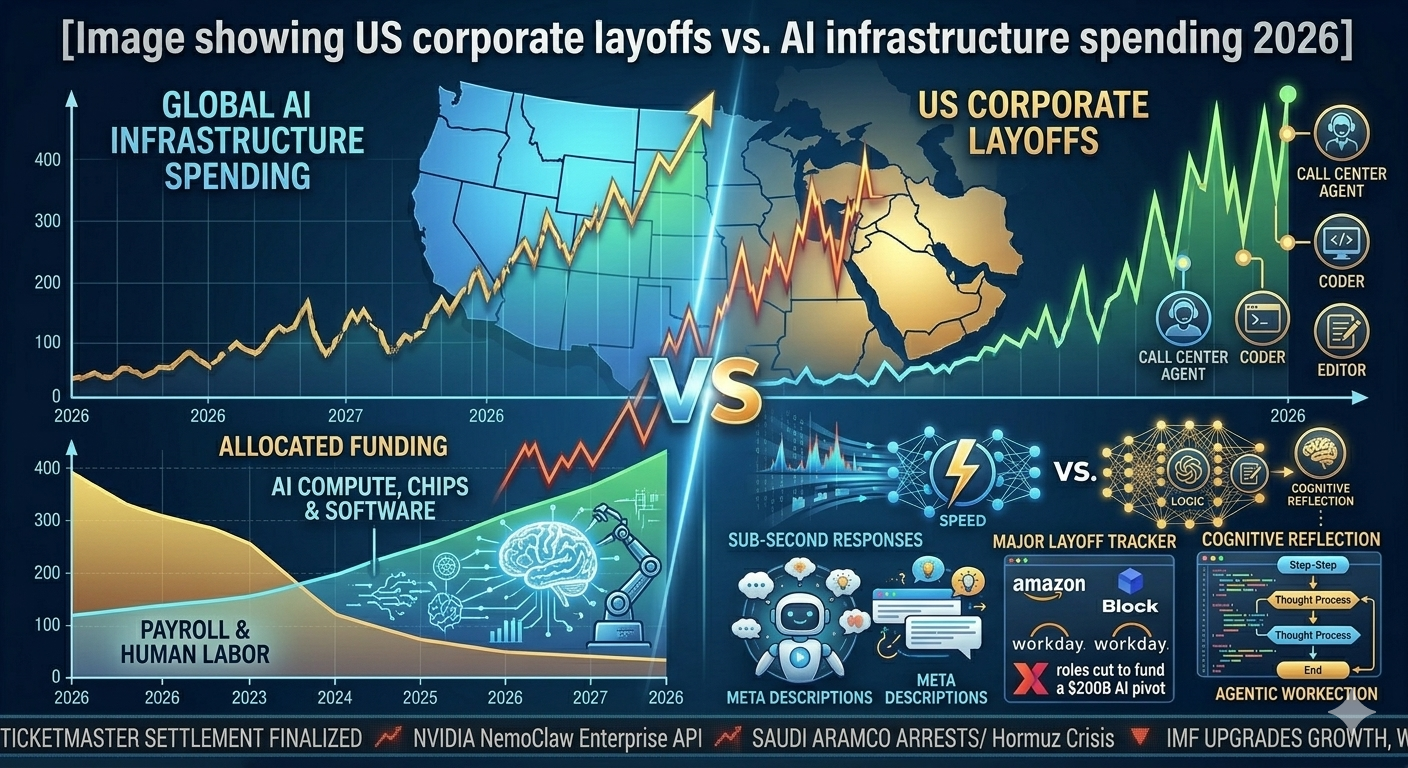
This shift is exacerbated by the trend in Big Tech of mass layoffs to fund AI infrastructure, pushing skilled engineers to seek new, often sovereign, projects that can offer more stability and opportunities for innovation in the evolving AI landscape.
4. The Geo-Political Power Move: A New Global Balance
The distribution of AI power is rapidly becoming a defining characteristic of 2026 geopolitics. Sovereign AI allows nations to project influence and assert autonomy.
The New Geopolitical Landscape:
- AI Neutrality: Some nations may adopt a policy of “AI Neutrality,” refusing to standardize on American or Chinese models, instead prioritizing their own sovereign infrastructure as a core component of non-alignment.
- Regional Alliances: We are seeing the formation of regional AI coalitions, where multiple nations with shared cultural or linguistic ties collaborate to build a powerful regional model, pooling data and compute resources.
The ability to control the core intelligence driving one’s society is the new metric of global power.