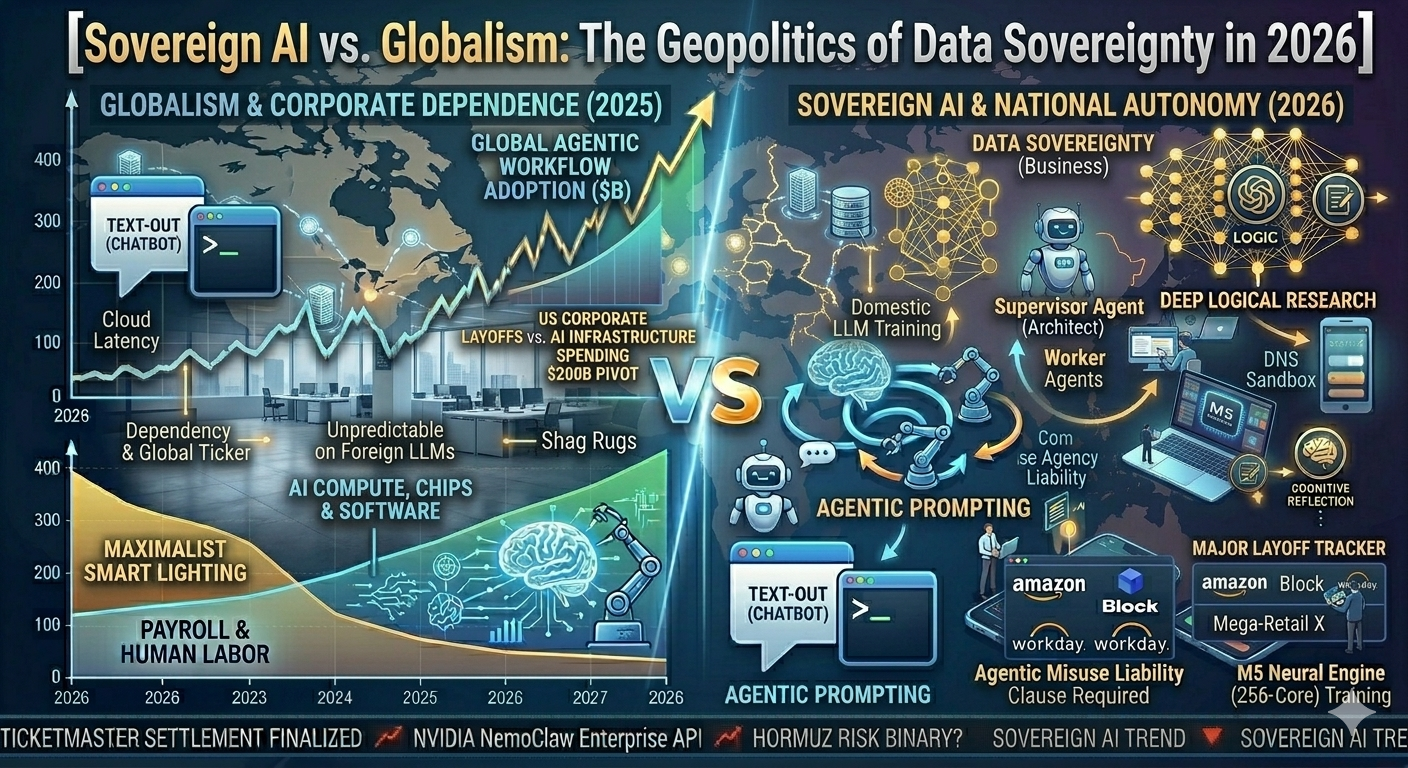
AI revolution ka shuruaati daur corporate dominance ka tha. OpenAI, Google, aur Microsoft jaise titans ne Large Language Models (LLMs) ki capabilities ko define kiya. Lekin, March 2026 mein ek naya paradigm emerging hai: Sovereign AI.
Duniya bhar ki hukoomatein ab AI ko ek critical national utility samajhti hain, bilkul bijli ke grid ya pani ki supply ki tarah. Woh ab foreign-controlled technology par depend nahi rehna chahte.
Dependency se Autonomy tak ka Safar
Ab tak, governments American ya Chinese AI tools ko adapt karne par focus karti thin. Lekin is approach ke profound long-term risks ab sovereign push ko drive kar rahe hain:
- Security Risks: Sensitive governmental ya defense tasks ke liye foreign LLMs par rely karna imense vulnerability create karta hai. Jab compute aur ownership borders ke paar ho, toh data privacy guarantee karna namumkin hai.
- Cultural & Linguistic Gap: Big Tech ke LLMs intrinsically Western-centric training data se biased hain. Ek Sovereign AI, jo localized legal texts, historical data, aur literature par trained ho, woh kisi nation ke specific social norms, idioms, aur legal nuances ko behtar samajhta hai.
Economic Catalyst: Local Ecosystems ka Qayam
AI adoption ka standard model ab simple “text-out” (chatbots) se move kar ke Agentic Workflows (AI taking autonomous action) ki taraf ja raha hai. Isko kisi economy mein effectively implement karne ke liye, ek reliable, localized base layer ki zaroorat hoti hai.
- Domestic Innovation: Ek Sovereign LLM domestic startups aur corporations ke liye ek common “operating system” provide karta hai.
- Talent Development: National AI build aur maintain karne se high-skill talent mulk ke andar hi rehta hai. Yeh trend Big Tech ke mass layoffs ke bayis aur bhi mazeed tez ho raha hai, kyunki skilled engineers naye projects ki talash mein hain (see image).
Conclusion: Global Power ka Naya Metric
AI power ki distribution March 2026 ki geopolitics ka ek defining characteristic banti ja rahi hai. Sovereign AI nations ko apni influence project karne, autonomy assert karne, aur digital age mein apni cultural identity protect karne ki ijazat deta hai. Jo mulk is race mein peeche reh jayenge, woh technology ke “takers” ban kar reh jayenge, “makers” nahi.